


All screenings at 'Camino a FIDOCS 30' are free. For screenings at the Cineteca Nacional de Chile, you must reserve your ticket online; the link is available here.
In 1997, in a Chile still trapped in a perpetual transition, Patricio Guzmán founded FIDOCS. Under the name 'First International Documentary Film Festival in Chile', its first edition was held at the Goethe-Institut, as its sole venue.
Among the activities of that inaugural edition, the 'First Retrospective of Chilean Documentary Cinema' stood out, a selection that recovered fundamental works by filmmakers such as Sergio Bravo, Héctor Ríos, Carlos Flores, and Ignacio Agüero. The following year, a second retrospective was programmed, expanding the historical scope and incorporating new films and filmmakers. Both exhibitions constituted one of the first systematic efforts to rescue, exhibit, and foster dialogue about a fundamental part of Chile's audiovisual heritage.
As part of the celebration of FIDOCS' thirtieth edition, we revisit this foundational retrospective, revisiting some of the films that helped define the Festival's identity and allowed us to rediscover a documentary tradition as diverse as it is essential. More than a re-release, this program functions as a 'Retrospective of the Retrospective': works that bring together different eras—the time of their creation, that of the first retrospective, and the present—to observe, through their images, what remains unchanged and what has yet to fully transform.
Between the late 1950s and the final years of the dictatorship, these five films span more than three decades of inequality and grassroots organizing. From the families who built the La Victoria settlement in 'Las Callampas' (1957) to the uncertainty with which the young people of La Pincoya face the future in 'Caminito al Cielo' (1989), the city is observed from its margins and through the experiences of those who inhabit them. 'Herminda de la Victoria' (1969) and 'Campamento Sol Naciente' (1972) document land occupations and the strength of community life, while the montage in 'Venceremos' (1970) juxtaposes the lifestyles of different sectors of society, making visible the inequality and political polarization of the country. Taken together, these works trace a journey that ranges from the strength of the collective and the shared construction of our society to the individual displacement and loss of common ground left by the dictatorship.
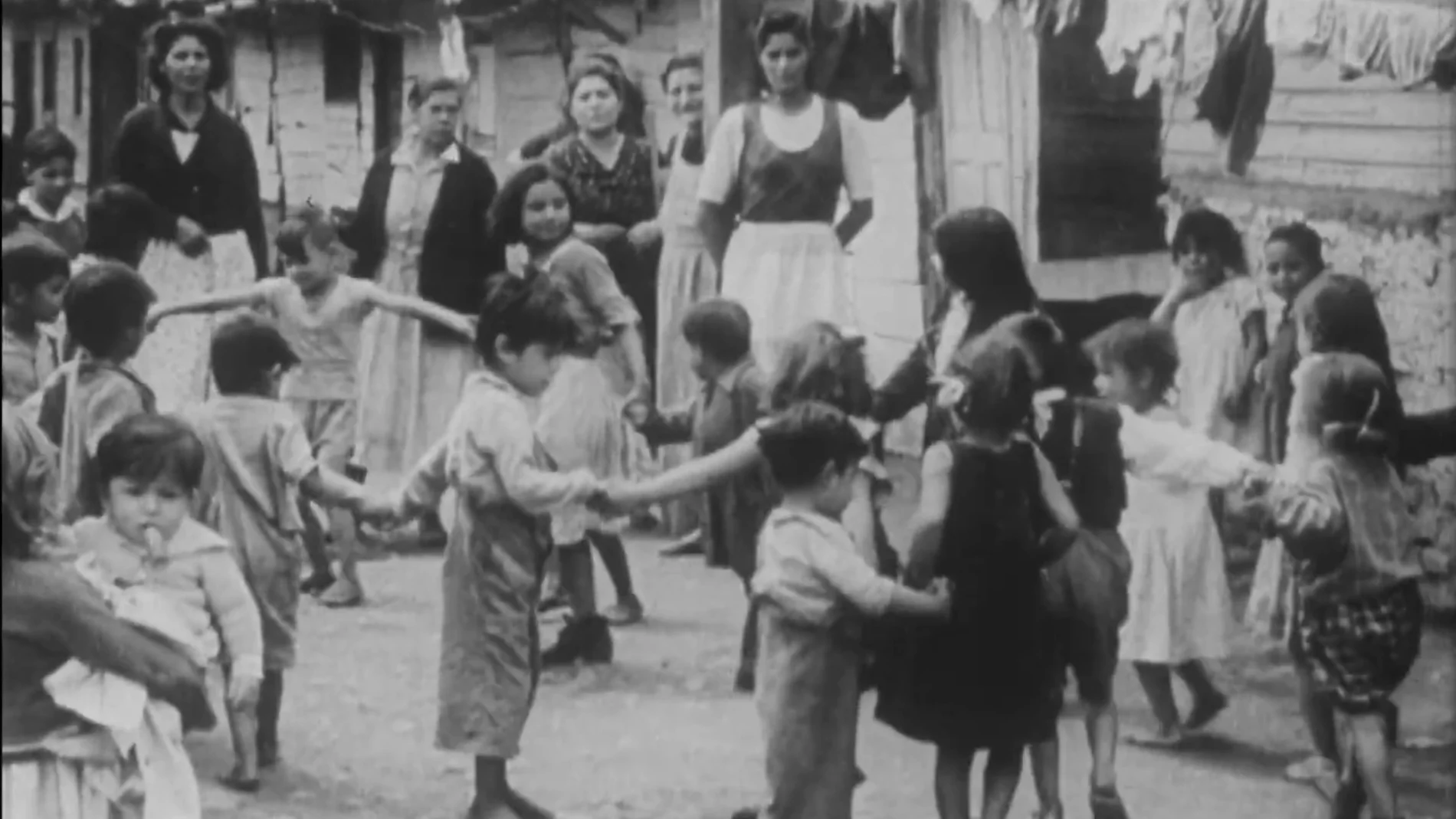
Mushrooms
On October 26, 1957, a nighttime fire reduced to rubble the homes of more than 30,000 residents of a shantytown on the banks of the Zanjón de la Aguada canal in Santiago. The burned-out houses plunged adults and children into despair. Amid the mud and misery, they asked themselves: Is it worth rebuilding this?
Rafael Sánchez (1920-2006). Filmmaker, documentarian, and teacher. He studied Music at the Conservatory and earned a degree in Philosophy. Between 1938 and 1954, he was a Jesuit priest. He began his film training in 1939 in Buenos Aires and continued in Canada and the United States. With an extensive body of work, he was a pioneer in the field of documentary filmmaking and, from the beginning, demonstrated a humanist vocation in his approach to capturing reality. In 1955, he founded the Film Institute of the Catholic University of Chile, the country's first higher education film school, where he trained several generations of filmmakers.
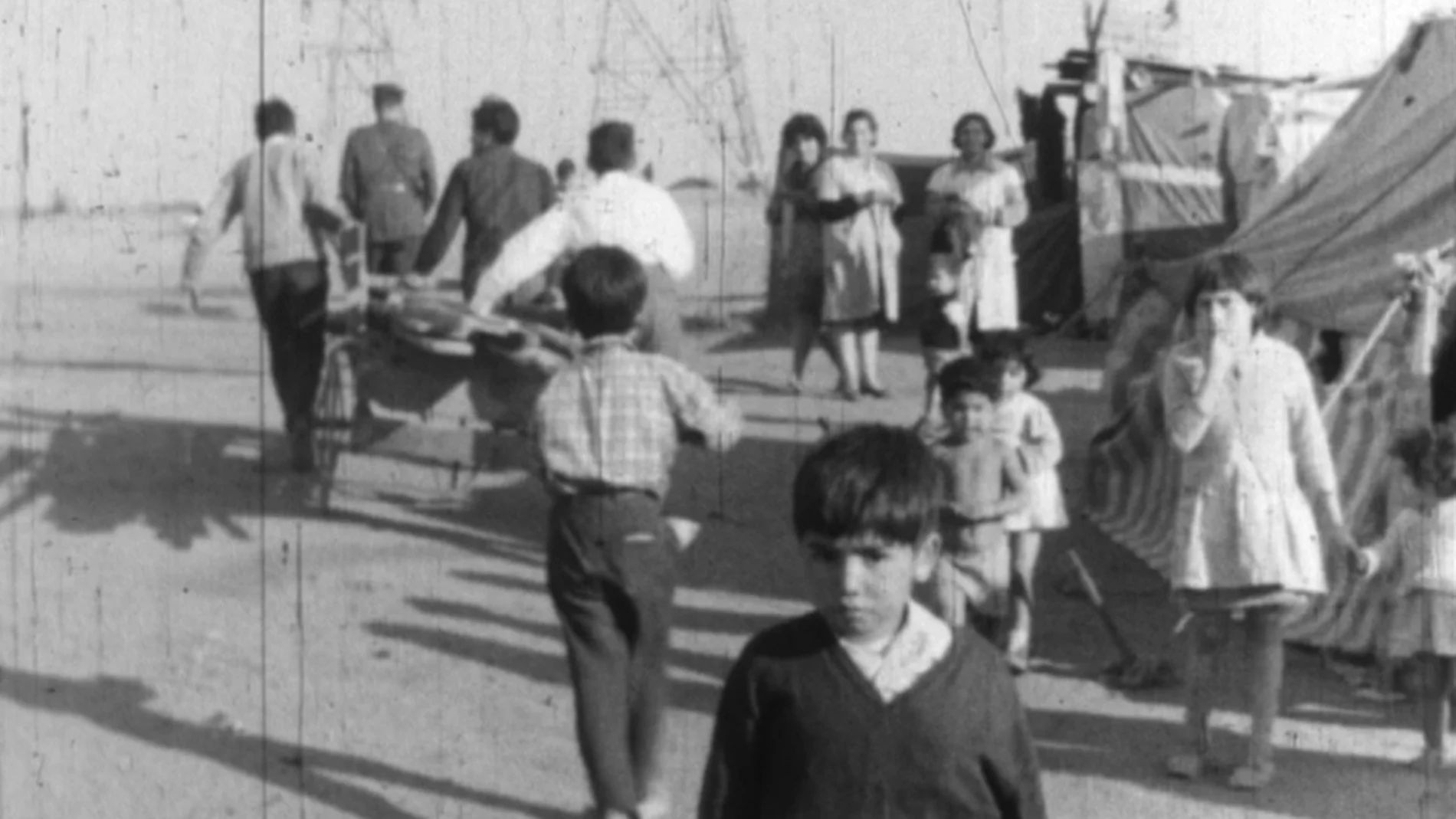
Herminda of Victory
In the late 1960s, hundreds of people living in extreme poverty occupied land on the outskirts of Santiago to build their homes. The residents were violently evicted by the Carabineros (Chilean police), and in the ensuing confrontation, Herminda, a baby just a few months old, was killed. Through the accounts of its inhabitants, including her mother, the documentary reconstructs the events and reveals the living conditions of those who inhabit the settlement.
Douglas Hübner He is a journalist, documentary filmmaker, and audiovisual producer. He began his career in film as an assistant director to Helvio Soto on the film 'Yo tenía un camarada' (1964) and in 1967 began work on 'Herminda de la Victoria', his first documentary. During the Popular Unity government, he was the creative manager of Chile Films and later went into exile in the German Democratic Republic, where he made several documentaries, including 'Dentro de cada sombra crece un vuelo' (1976). He returned to Chile in 1981 and continues to work in film, journalism, and audiovisual production.
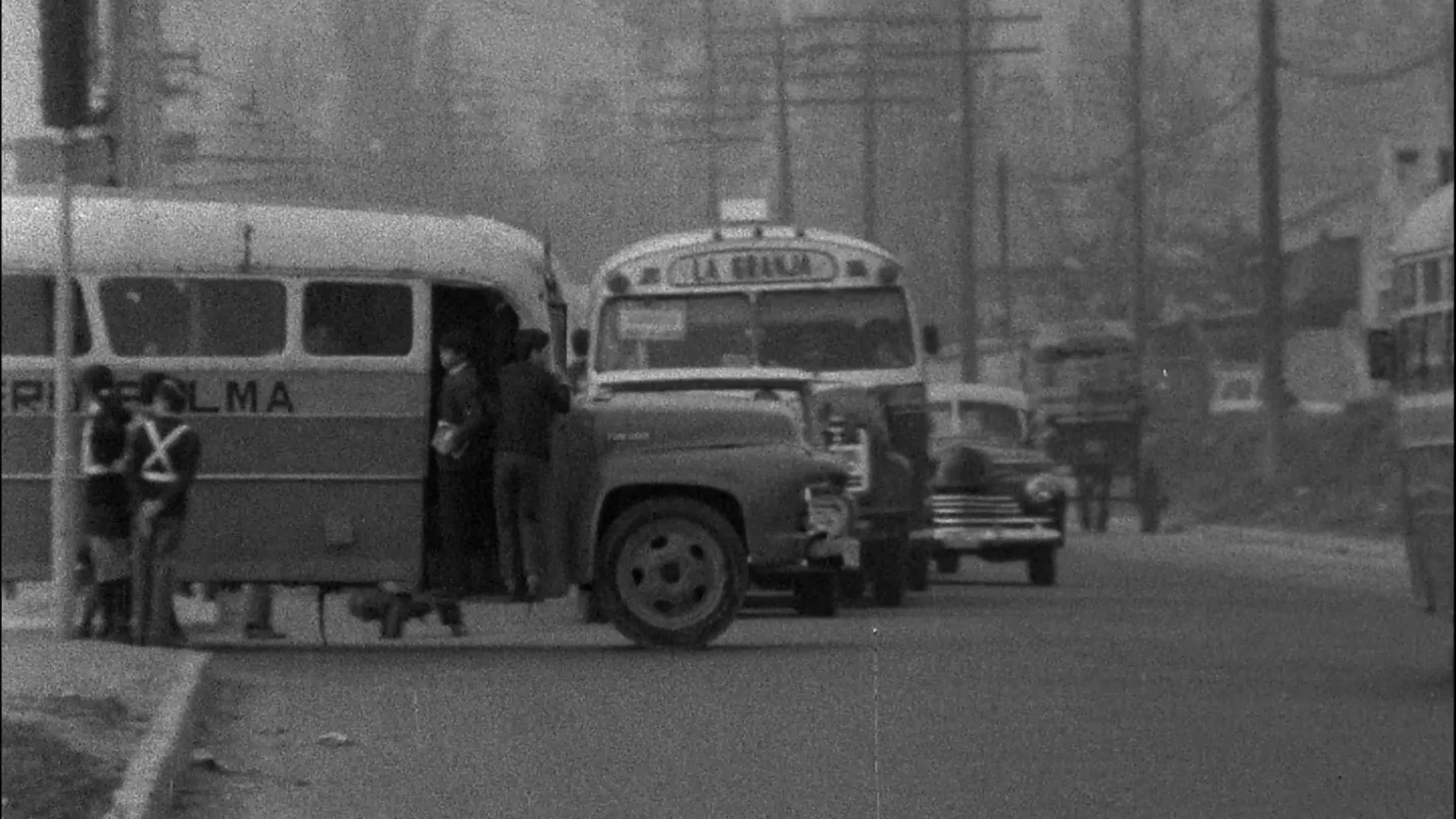
We will win
This audiovisual collage portrays the profound social inequalities that plagued Chile in the early 1970s and the implicit violence of daily life. The documentary culminates in a popular celebration: on September 4, 1970, the streets of Santiago filled with people celebrating Salvador Allende's victory.
Pedro Chaskel (1932–2024). Filmmaker and editor; a pioneer of the New Chilean Cinema. He was born in Germany and arrived in Chile with his family in 1939. He studied Architecture at the University of Chile and in 1954 founded the Film Club of the Federation of Chilean Students. He was a co-founder of the Experimental Film Center at the University of Chile and later director of its Film Archive and Film Department. Together with Héctor Ríos, he directed important documentaries: 'Aquí vivieron' (1964), 'Venceremos' (1970), and the short film 'Érase una vez' (1965). After the coup d'état, he went into exile in Cuba, where he worked as a filmmaker and editor. He returned to Chile in 1985 and continued to develop a significant film career.
Hector Rios (1927-2017). Cinematographer, director, and teacher; a key figure in Chilean cinema. He studied Electrical Engineering at the State Technical University and later Cinematography at the Centro Sperimentale di Cinematografia in Rome. In 1964, he joined the Film Department of the University of Chile, where he developed a distinguished career. Together with Pedro Chaskel, he directed important documentaries such as 'Aquí vivieron' (1964) and 'Venceremos' (1970), and the short film 'Érase una vez' (1965). He also directed the documentary 'Entre ponerle y no ponerle' (1971). During the dictatorship, he went into exile in Peru and Venezuela, where he taught. He was the cinematographer for films such as 'El Chacal de Nahueltoro', 'La colonia penal', 'Los testigos', and 'La frontera'. In 2007, he received the Pedro Sienna Award for Outstanding Career Achievement.
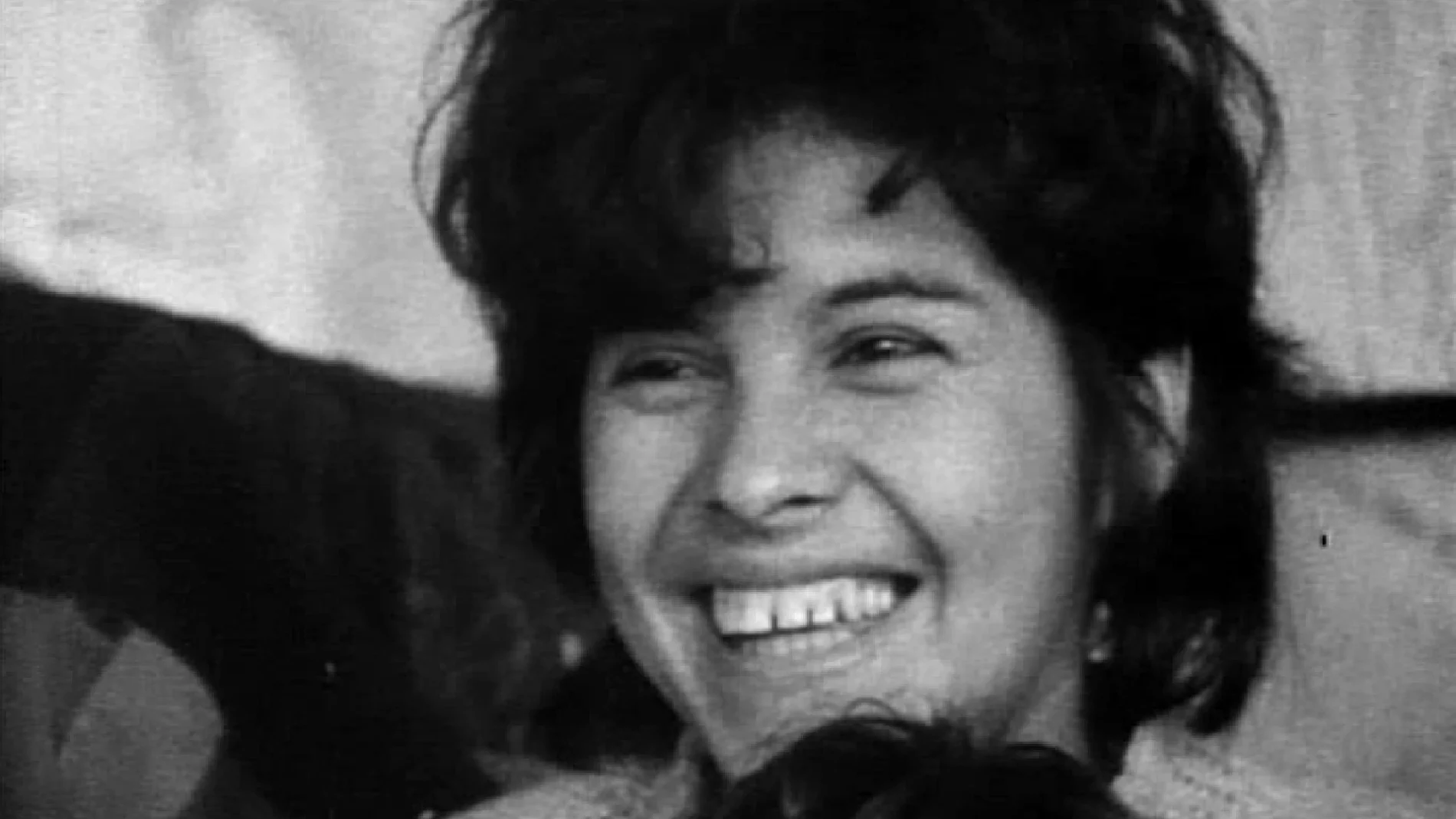
Camp Rising Sun
On Monday, April 3, 1972, a group of women led by Olga Pradenas Cerda replaced a sign that read “No Entry. Private Property” with a Chilean flag. They had tried to buy the land on more than one occasion, but its owners continually raised the price. Faced with the precarious conditions in which they lived and the impossibility of accessing housing, they decided to occupy it. Thus, Campamento Sol Naciente (Rising Sun Camp) was born, the first camp led solely by women.
Ignacio Aliaga He is a documentary filmmaker and screenwriter. He studied Film at the School of Communication Arts of the Catholic University of Chile, during which time he filmed 'Campamento Sol Naciente' (1972). He has played an important role in the dissemination, preservation, and enhancement of the country's audiovisual heritage. He was head of the Film Area of the cultural division of the Ministry of Education, head of the Department of Artistic Creation and Dissemination of the National Council for Culture and the Arts, and director of the National Film Archive of Chile.
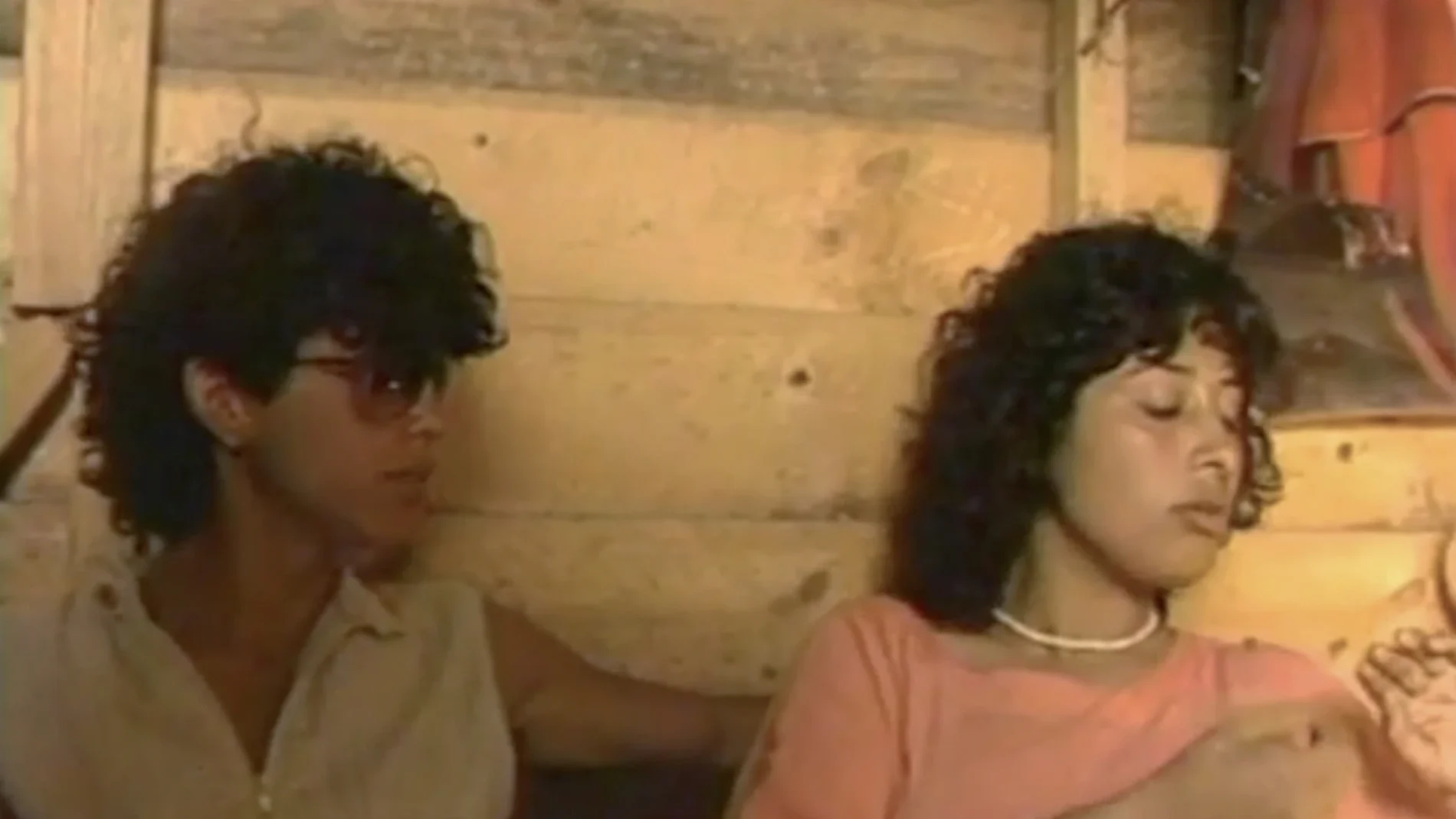
Little path to heaven
In the La Pincoya neighborhood in the late 1980s, a group of young people from Villa Wolf discuss the future, work, love, sex, and drugs. Through their testimonies, routines, and portrayals of their personal, social, and marginalized world, they themselves construct their perspective on the reality they live in.
This work was made possible thanks to the Soinde health program, the Conchalí clinic, and the La Ventana cultural center.
Sergio Navarro (1943-2021). Artistic director with a degree in Film from the Pontifical Catholic University of Chile and a PhD in American Studies from the University of Santiago, Chile. He made documentaries in Chile, Ecuador, and Canada, including: 'Caminito al cielo' (Little Path to Heaven), 'Cuartito rosa' (Little Pink Room), 'El páramo del ciudadano' (The Citizen's Wasteland), 'Patricio Manns, vuelvo al sur' (Patricio Manns, I'm Returning to the South), and 'Nostalgias del far west' (Nostalgias of the Far West). He also taught at various universities and in 2003 founded the Film program at the University of Valparaíso, where he was its first director.