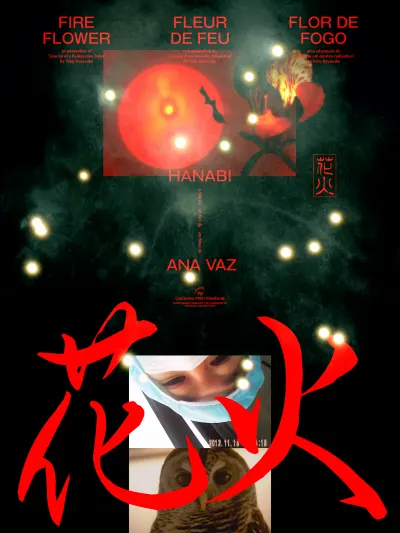
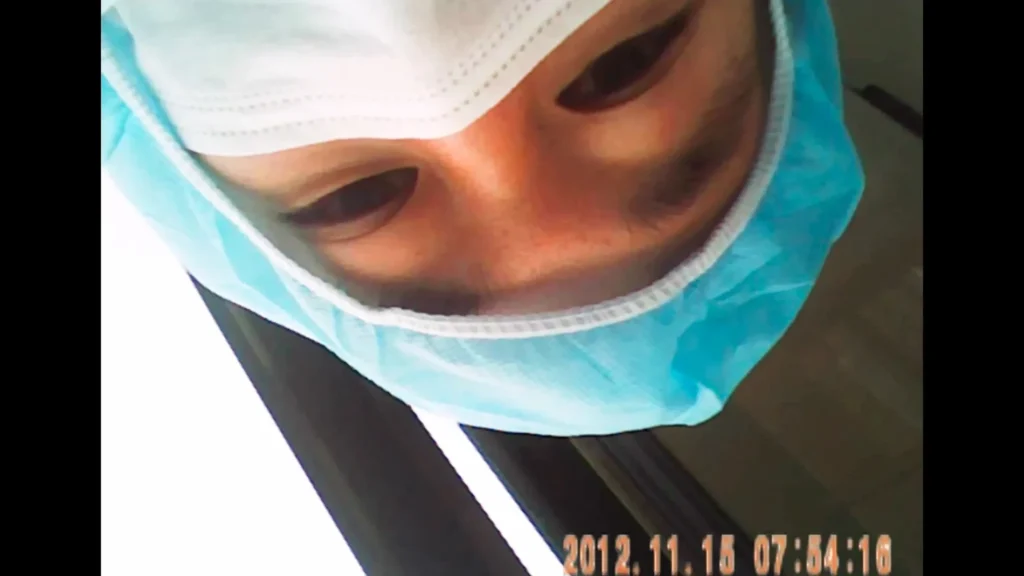
Filmed intermittently in Japan over ten years, 'Hanabi' is a visceral adaptation of Yoko Hayasuke's 'Journal of a Radioactive Brain,' written in the aftermath of the tsunami and nuclear disaster that followed the 2011 Tōhoku earthquake in Japan. Ana Vaz interweaves the author's intimate account of the disaster's micropolitical consequences with stories of survival and resilience from communities that seem to inhabit a world already collapsed. Resilient beekeepers, dedicated marine biologists, radioactive decontamination workers, utopian gardeners, and people with radiation phobia make up this constellation of resistance.
In her second feature film, Ana Vaz films Japan over ten years, exploring a territory suspended in time, where the nuclear threat lingers as an invisible presence. Drawing on Yoko Hayasuke's diary, the film delves into the aftermath of Fukushima, constructing an introspective and sensory journey toward a kind of sedating apocalypse. Voices, testimonies, and fragments of memory intertwine with abstract images and a powerful soundscape, disorienting the viewer and altering our perception of time. Amid contaminated landscapes, bodies, animals, and resilient communities, 'Hanabi' creates a world where catastrophe is part of everyday life. A hypnotic film that leaves questions unanswered and slowly absorbs us, like a toxic liquid.
Josefa Infante, FIDOCS 30 programmer