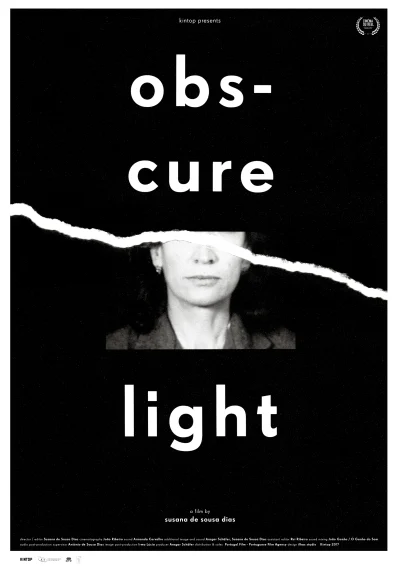
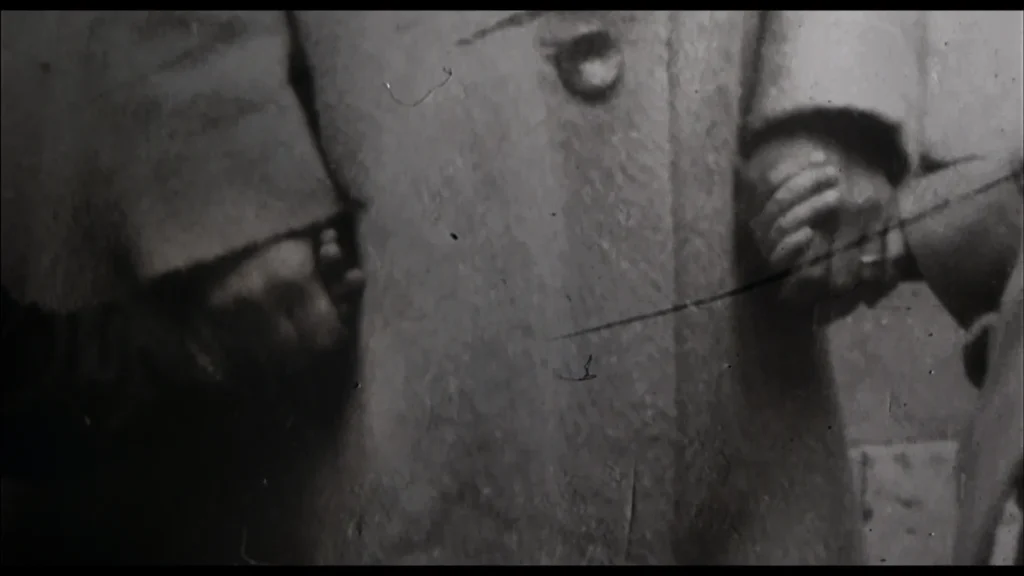
How many members of a family become entangled in the web of the political police after the arrest of a political prisoner? How do you shape someone who disappeared without ever having had a historical existence? Taking as its starting point photographs taken by the Portuguese political police between 1926 and 1974, 'Dark Light' seeks to reveal how an authoritarian system operates within the intimacy of the family, while also showing areas of repression that shape the present.
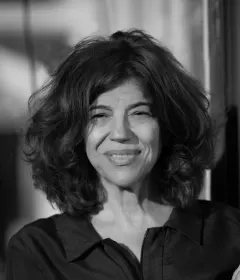
What story do the images produced by those in power tell about themselves? This question—and perhaps also a method—seems to permeate the work of Portuguese filmmaker Susana de Sousa Dias, who finds in the official archive a form of cinematic interrogation to examine colonial legacies and the fractures of a memory marked by the trauma of the Portuguese dictatorship, the longest-lasting in Western Europe in the 20th century. Throughout her work, the director revisits archival images to question the authority that produced them and examine both what they make visible and what they leave out: from the propaganda and police records of 'Natureza morta' to the portraits and testimonies of '48'; from the familial traces of political persecution in 'Luz obscura' to the voices of those who now inhabit Fordlândia and contest the meaning of that industrial utopia in 'Fordlândia Panacea'.
With Susana de Sousa Dias's presence at the Festival, this retrospective proposes considering documentary as a practice of reinterpretation in which each document, each photograph, contains more than one story, and in which revisiting these images can also be a way of contesting who has the right to narrate them. Today more than ever, in a present marked once again by the advance of authoritarian forces and the growing threat of the algorithm, her work reminds us that images continue to shape our understanding of the past and imagine other futures with the ghosts and shadows of the present, where threats coexist with the wonder of what may yet unfold. Ultimately, this is a cinema that transforms the audiovisual document into a form of political pedagogy, sharpening our gaze and teaching us to listen more carefully, more attentively, to those areas of silence and those silenced voices.
Cristóbal Escobar, FIDOCS programmer 30