

All screenings at 'Camino a FIDOCS 30' are free. For screenings at the Cineteca Nacional de Chile, you must reserve your ticket online; the link is available here.
In 1997, in a Chile still trapped in a perpetual transition, Patricio Guzmán founded FIDOCS. Under the name 'First International Documentary Film Festival in Chile', its first edition was held at the Goethe-Institut, as its sole venue.
Among the activities of that inaugural edition, the 'First Retrospective of Chilean Documentary Cinema' stood out, a selection that recovered fundamental works by filmmakers such as Sergio Bravo, Héctor Ríos, Carlos Flores, and Ignacio Agüero. The following year, a second retrospective was programmed, expanding the historical scope and incorporating new films and filmmakers. Both exhibitions constituted one of the first systematic efforts to rescue, exhibit, and foster dialogue about a fundamental part of Chile's audiovisual heritage.
As part of the celebration of FIDOCS' thirtieth edition, we revisit this foundational retrospective, revisiting some of the films that helped define the Festival's identity and allowed us to rediscover a documentary tradition as diverse as it is essential. More than a re-release, this program functions as a 'Retrospective of the Retrospective': works that bring together different eras—the time of their creation, that of the first retrospective, and the present—to observe, through their images, what remains unchanged and what has yet to fully transform.
What does it mean to be young in a country where the future seems suspended? Made during the 1980s, these three films explore a generation searching for spaces of freedom amidst the dictatorship. 'The Pacifist Warriors' observes the punk scene's emergence in Santiago with humor and irony; 'Willy and Myriam' delves into the private lives of a young couple facing unemployment and a lack of communication; and 'Summer Party' travels along the central coast to listen to young people from different social classes talking about love, studies, work, family, and the country. Between collective expression, the fragility of relationships, and uncertainty about the future, these films reveal different ways of growing up in a restrictive and fractured environment.
Willy and Myriam
A documentary narrated by its protagonists, showing the daily life of a young Chilean couple from a working-class background and their four young children. Faced with unemployment, poverty, rural-to-urban migration, and lack of communication, they struggle to stay together as a family.
David Benavente He is a Chilean playwright, sociologist, teacher, and documentary filmmaker. He studied Literature and Sociology at the University of Chile and was the founder and director of the School of Communication Arts at the Catholic University. During the dictatorship, he developed a significant body of documentary video work focused on social and cultural issues. His notable works include 'Mecánicos' (Mechanics), 'El Willy y la Myriam' (Willy and Myriam), 'Blanca Azucena' (White Lily), and 'Parando la olla' (Stopping the Pot). He is also the author of plays such as 'Pedro, Juan y Diego' (Pedro, Juan, and Diego) and 'Tres Marías y una Rosa' (Three Marias and a Rose).
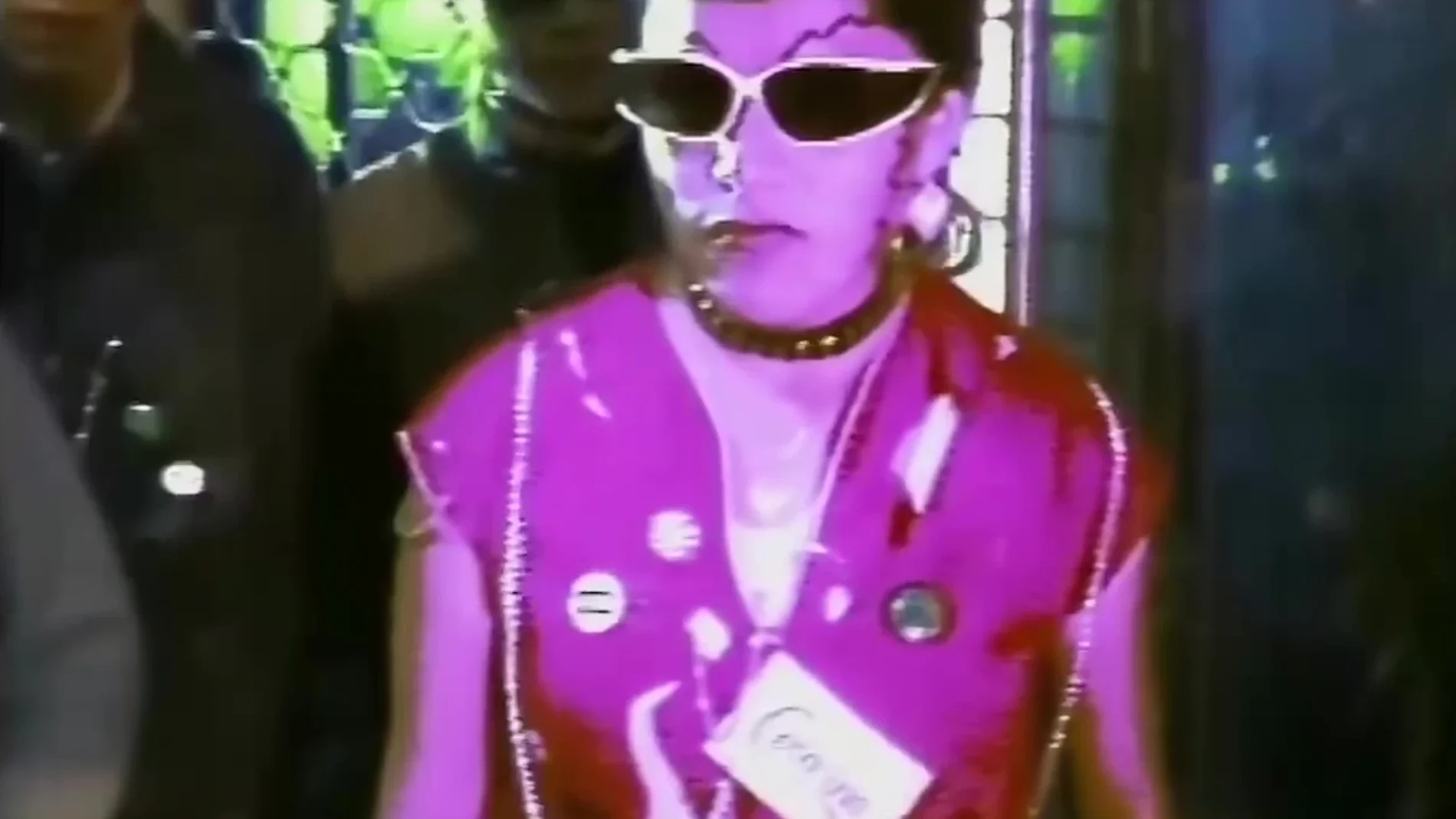
Pacifist warriors
Gonzalo Justiniano takes his camera to parties, streets, record stores, and hair salons to meet a group of young people playing at being punks amidst the suffocating society of the dictatorship. Those who speak here are not musicians or painters, but their followers, who hope for social change through a form of protest distinct from the conventional one.
Gonzalo Justiniano He is a Chilean film director, screenwriter, and producer. He studied film at the Catholic University and left Chile at the age of twenty to settle in France, where he lived between 1976 and 1983. During this period, he studied film at the University of Paris VIII and the Louis Lumière Film School, and began making documentaries. Upon returning to Chile, he worked as a foreign correspondent for French television and North American channels, and made documentaries about the country's social and political reality. His filmography includes 'Children of the Cold War' (1986), which received the First Feature Award at the 1985 Biarritz Film Festival, 'Sussi' (1988), 'Caluga o menta' (1990), 'Amnesia' (1994), 'B-Happy' (2003), and 'Cabros de mierda' (2017).
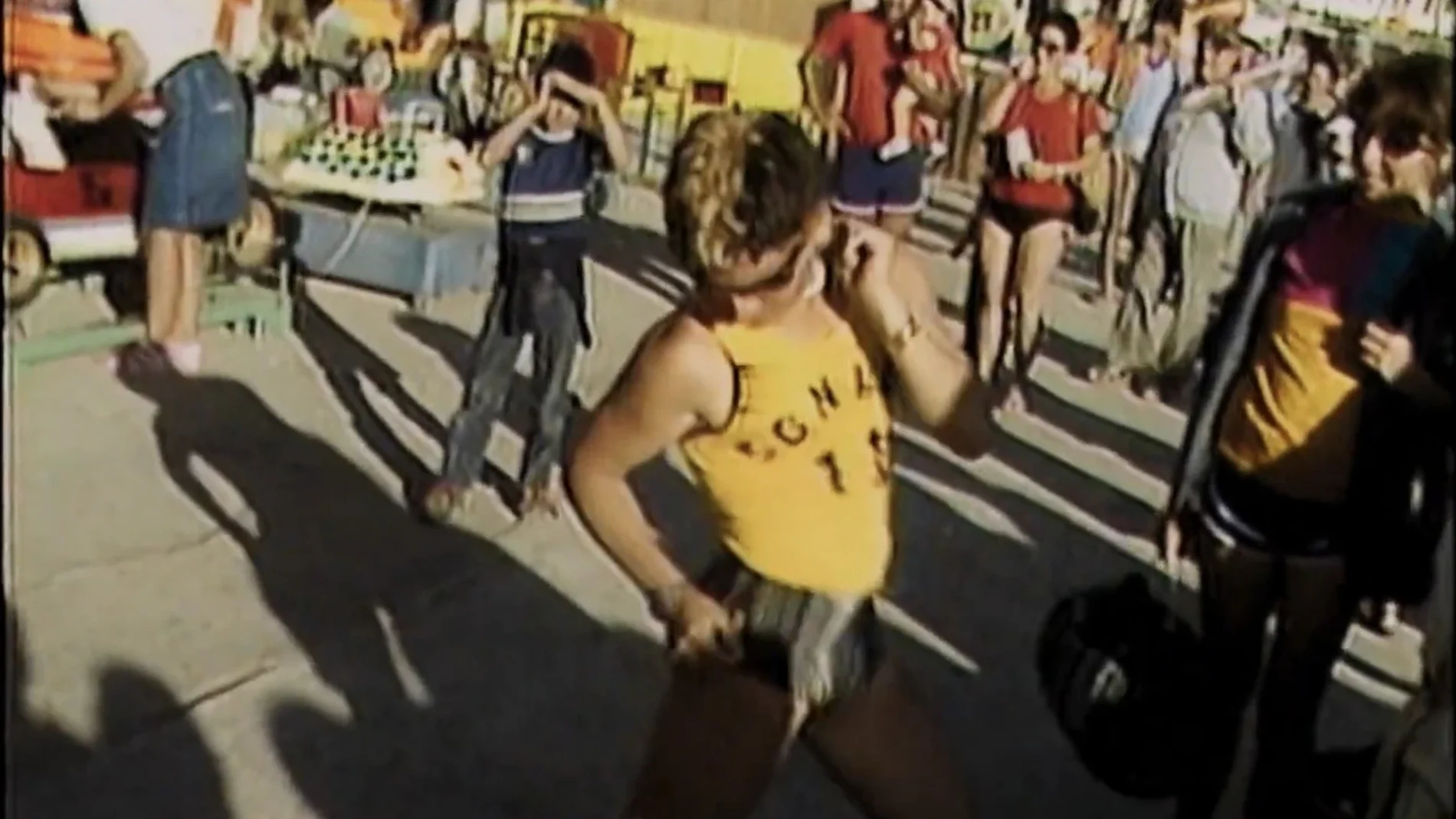
Summer reel
A social journey along the coast of central Chile, from the popular Cartagena to the exclusive Algarrobo, allows us to capture the voices of young people. Amidst the parties and fun, aspirations, worries, and topics such as work, studies, relationships with their parents, dating, the future, and the country emerge. A certain mood of Chilean youth that summer of '84.
Marcos de Aguirre He is a Chilean filmmaker, sound engineer, producer, and post-production specialist. In 1984, he co-directed 'Carrete de verano' with Patricia Mora. As a sound engineer, he worked on Joaquín Eyzaguirre's 'Dolores' (1984) and subsequently developed production and post-production skills for films and documentaries. He is the founder, manager, and CEO of Filmosonido (now Filmo Estudios), a post-production company through which he has participated in numerous Chilean and international film projects.
Patricia Mora She is a filmmaker and audiovisual producer. An architect and slide artist, she has developed a career linked to documentary filmmaking and the observation of social reality. In 1984, she co-directed 'Summer Reel' with Marcos de Aguirre, a documentary produced by ICTUS. She later directed 'Rain Cloud' (1989), about Aymara culture, and 'Inland Sea' (2003).