

All screenings at 'Camino a FIDOCS 30' are free. For screenings at the Cineteca Nacional de Chile, you must reserve your ticket online; the link is available here.
In 1997, in a Chile still trapped in a perpetual transition, Patricio Guzmán founded FIDOCS. Under the name 'First International Documentary Film Festival in Chile', its first edition was held at the Goethe-Institut, as its sole venue.
Among the activities of that inaugural edition, the 'First Retrospective of Chilean Documentary Cinema' stood out, a selection that recovered fundamental works by filmmakers such as Sergio Bravo, Héctor Ríos, Carlos Flores, and Ignacio Agüero. The following year, a second retrospective was programmed, expanding the historical scope and incorporating new films and filmmakers. Both exhibitions constituted one of the first systematic efforts to rescue, exhibit, and foster dialogue about a fundamental part of Chile's audiovisual heritage.
As part of the celebration of FIDOCS' thirtieth edition, we revisit this foundational retrospective, revisiting some of the films that helped define the Festival's identity and allowed us to rediscover a documentary tradition as diverse as it is essential. More than a re-release, this program functions as a 'Retrospective of the Retrospective': works that bring together different eras—the time of their creation, that of the first retrospective, and the present—to observe, through their images, what remains unchanged and what has yet to fully transform.
Filmed in different places and times, 'No olvidar' (1982) and 'La flaca Alejandra' (1994) confront the open wounds inflicted by the dictatorship. With an austere, silent, and understated mise-en-scène, Ignacio Agüero addresses the Lonquén Kiln massacre through the testimonies of the Maureira family and their demand for truth and justice. Carmen Castillo, on the other hand, returns to Chile to meet with Marcia Merino, a former leader of the MIR (Movement of the Revolutionary Left) who was tortured into becoming a collaborator of the DINA (National Intelligence Directorate). Their conversation delves into the most complex aspects of militancy, betrayal, and survival. This dialogue brings together two filmmakers who have been constant partners of FIDOCS since its early editions and whose works are an essential part of the festival's history.
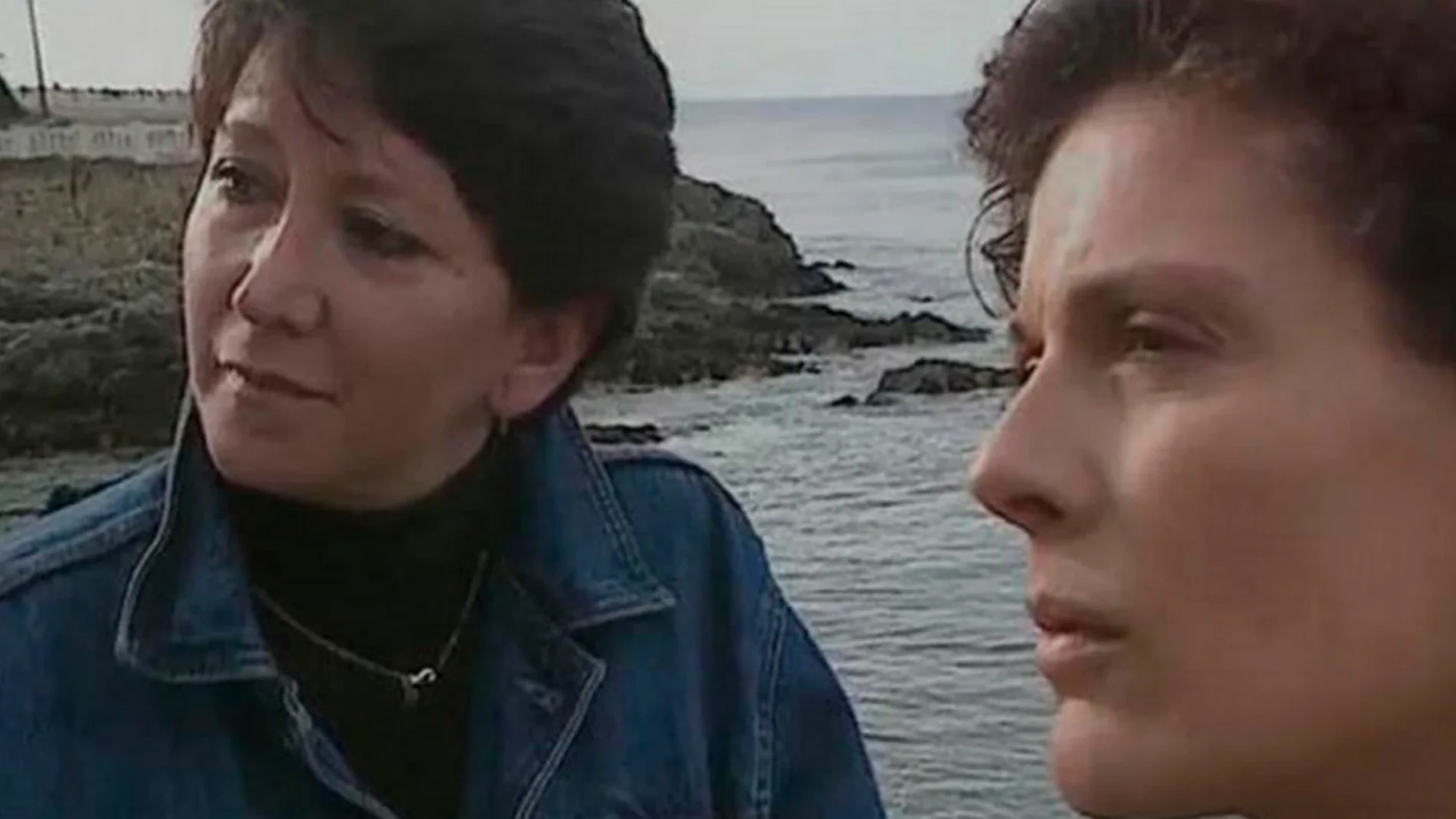
Skinny Alejandra
Marcia Merino, known as “Skinny Alejandra,” was arrested in 1974 for being a member of the MIR (Movement of the Revolutionary Left). After being interrogated and tortured, she ended up collaborating and revealed the names of friends and members of her party. She spent 18 years in the hands of the DINA (National Intelligence Directorate). In November 1992, she held a press conference in which she confessed to her collaboration with the political police of the military regime and publicly apologized to the victims she had denounced. Carmen Castillo was one of them, and almost twenty years later she returns from exile to have an extensive conversation with Merino and reconstruct, through her memory, what happened during those years. A crucial document against forgetting.
Carmen Castillo She is a documentary filmmaker renowned for her commitment to the historical memory of Chile and Latin America. She taught at the Catholic University and worked in the government of Salvador Allende. After the coup, she was arrested and expelled from Chile. She went into exile in France, where she began her film career. Her work primarily addresses memory, the dictatorship, and the experiences of political activism, with films such as 'La flaca Alejandra' (1994), 'El país de mi padre' (2004), and 'Calle Santa Fe' (2007), which premiered at Cannes. In 2025, she received the Pedro Sienna Award for Outstanding Career Achievement.
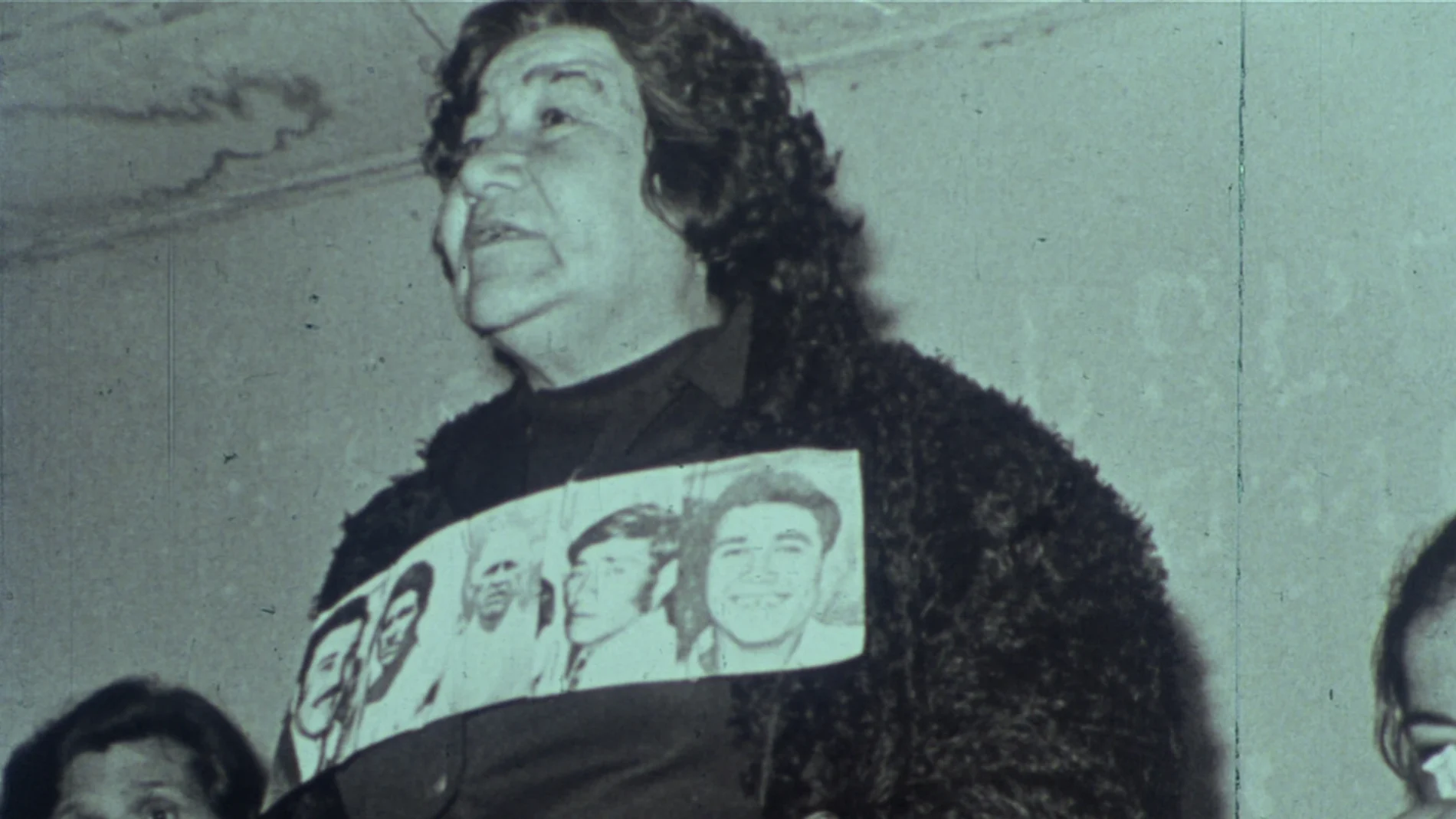
Don't forget
A documentary about the Lonquén massacre. It is based on the testimonies of the women of the Maureira family, who for six years searched for five men in their family detained by the police a few days after the military coup. In 1978, their remains were found buried in the kilns of an old lime mine, very close to their homes. The discovery was a pivotal event in the history of the disappeared in Chile: for the first time, it was proven that people detained by state agents had been murdered and their bodies hidden, refuting the official narrative.
Ignacio Agüero He is one of Chile's most renowned documentary filmmakers. He graduated in 1979 from the School of Communication Arts at the Catholic University of Chile with a degree in Artistic Direction specializing in Film. Since 1982, he has developed an extensive body of documentary work that explores memory, recent history, daily life, and social transformations. He is a founding member of the Chilean Documentary Filmmakers Association, of which he was the first president. He has received numerous awards, including four Altazor Awards, the Pedro Sienna Award for Outstanding Career Achievement, the Prince Claus Award from the Netherlands, and various accolades at international and national film festivals.